


 My Profile
 My Pets
 My Address
 My Orders
 Coupons
 Refer & Earn
 Log Out
Monsoon Pet Grooming Guide: Keeping Your Dog & Cat Clean This Season
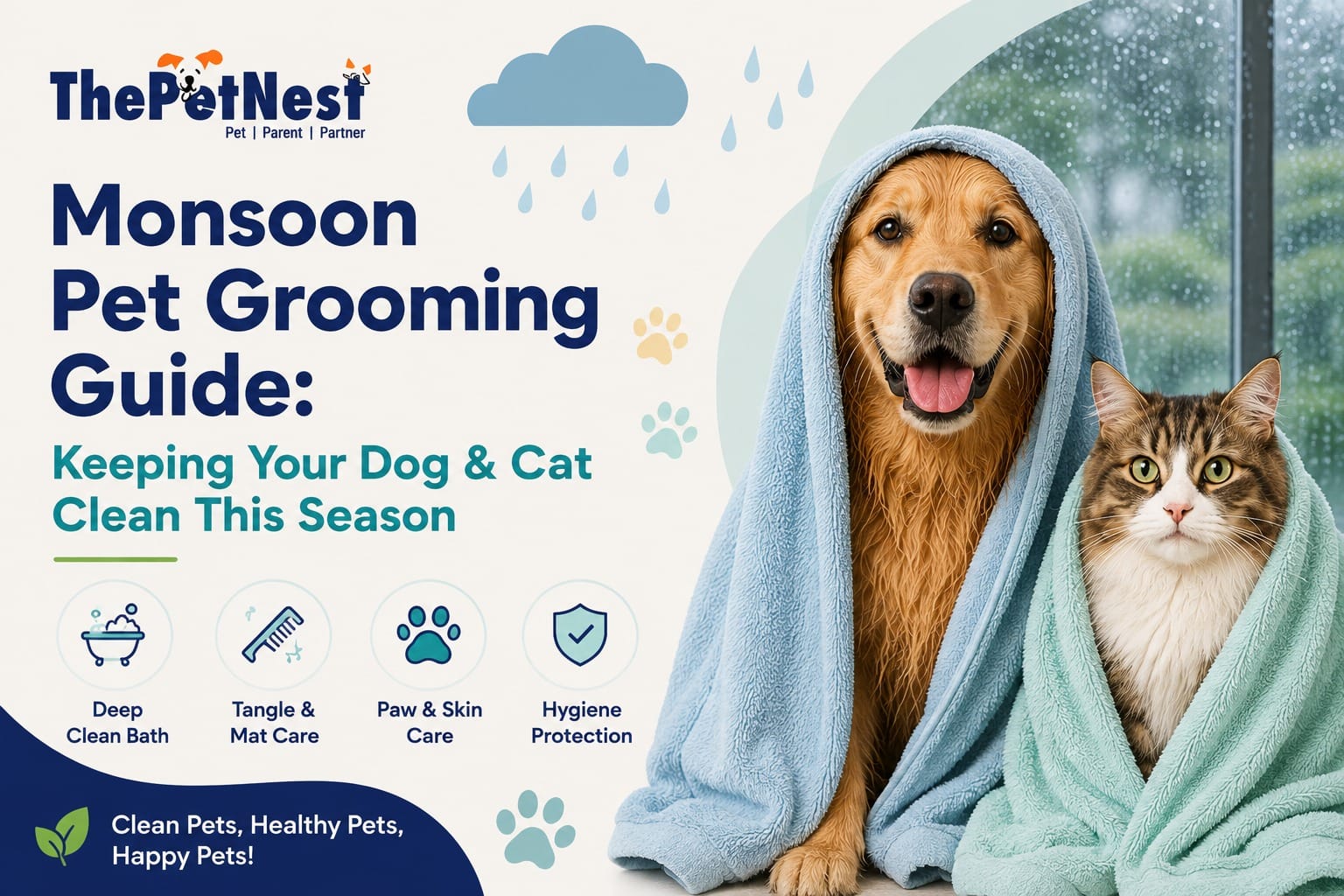
Keep Your Dog & Cat Clean This Monsoon Season
Monsoon is one of the toughest seasons for a pet's skin and coat. Wet fur, humid air and muddy paws create the perfect conditions for skin infections, bad odour and matting. If you have ever noticed your pet smelling damp no matter how many times you dry them, or scratching more than usual during the rains, the monsoon season is very likely the reason.
This guide explains exactly what monsoon does to your pet's skin and coat, and how regular grooming helps prevent the most common seasonal problems. We will also cover simple things you can do between grooming sessions to keep your pet comfortable through the rainy months.
Why Monsoon Is Hard on Your Pet's Skin and Coat
Humidity and moisture are the two biggest issues during monsoon, and they affect pets more than most people realise.
💧 Fur stays damp for longer. Wet fur takes much longer to dry naturally during monsoon because of the high humidity in the air. Damp fur sitting against the skin for hours creates a warm, moist environment where bacteria and fungus grow easily.
🐾 Paws pick up dirt and bacteria from puddles. Every walk during monsoon means your pet's paws are stepping through wet mud, standing water and street grime. This can lead to irritation, fungal infections, and a condition many pet parents notice as a strong, musty smell coming from the paws.
👂 Ears become more prone to infection. Moisture trapped inside the ear canal, especially in breeds with floppy ears, creates the ideal condition for ear infections during the monsoon months.
🪮 Shedding and matting increase. Many pets shed more heavily during seasonal transitions, and damp fur mats and tangles far more easily than dry fur.
🐛 Ticks and fleas are more active. Warm, humid weather is when ticks and fleas thrive, especially for pets that spend time outdoors.
None of this means your pet needs to suffer through monsoon. It simply means grooming routines need small adjustments during this season.
Monsoon Grooming Checklist
Here is a simple, practical checklist to follow during the monsoon months.
Dry your pet completely after every walk
This is the single most important monsoon habit. Use a clean, dry towel to wipe your pet down as soon as they come inside, paying close attention to the paws, belly and underarms, where moisture tends to collect. If your pet has a thick or long coat, a proper blow dry after a wet walk helps prevent damp fur from sitting against the skin for hours.
Check and clean paws after every outing
Wipe your pet's paws with a clean, damp cloth after every walk to remove mud, dirt and any standing water residue. Check between the paw pads for any redness, swelling or an unusual smell, which can be early signs of a paw infection.
Keep ears dry and clean
Check your pet's ears regularly during monsoon. If you notice a bad smell, redness, or your pet scratching at their ears more than usual, this is worth mentioning to your groomer or vet, since ear infections are more common in this season.
Brush more often to prevent matting
Damp fur tangles faster, so increase brushing frequency during monsoon, especially for long-coated and double-coated breeds. This also helps you spot ticks early, since they are more active in warm, humid weather.
Trim fur around paws and belly if needed
Slightly shorter fur around the paws and lower belly means less mud and water clinging to your pet after walks, and it dries faster too. A groomer can trim these areas without changing your pet's overall coat length.
Book grooming sessions more frequently
Many pet parents stretch grooming sessions further apart during other seasons, but monsoon is not the season to do that. More frequent bathing, brushing and coat checks during these months catch small problems, like early skin irritation or a hidden tick, before they turn into bigger ones.
Common Monsoon Skin Issues to Watch For
Being able to recognise the early signs of a monsoon-related skin issue helps you act quickly, before it becomes a bigger problem.
⚠️ Musty or sour smell, even shortly after a bath, often points to bacteria or fungus building up in damp fur.
⚠️ Red, irritated skin, especially in the paws, belly or underarms, is one of the most common monsoon skin issues.
⚠️ Excessive scratching or licking, particularly around the paws or ears, is usually a sign of irritation or infection.
⚠️ Small bald patches or flaky skin can be a sign of a fungal infection, which spreads more easily in humid weather.
⚠️ Visible ticks, especially after outdoor walks in grassy or muddy areas.
If you notice any of these signs and they do not improve within a day or two, it is worth getting your pet checked by a vet, alongside continuing regular grooming.
Why Professional Monsoon Grooming Helps
A professional groomer does more than just bathe your pet during monsoon. A proper grooming session includes a full check of your pet's skin, coat, ears and paws, which means early signs of irritation, ticks or fungal issues are often caught during a routine visit, before you might notice them yourself at home.
At-home grooming has a particular advantage during monsoon. Instead of carrying a wet, muddy pet out to a salon through the rain, a trained groomer comes to you, fully equipped with pet-safe products suited to seasonal skin care, and completes the entire session, drying included, without your pet ever leaving the house.
Monsoon Pet Grooming, Available Across Your City
Professional at-home grooming makes it much easier to manage your pet's skin, coat and hygiene through the monsoon season, with a trained groomer coming directly to you.
Frequently Asked Questions
How often should I groom my pet during the monsoon?
More often than in dry months. If your pet is usually groomed every 4 to 6 weeks, consider moving to every 3 to 4 weeks during peak monsoon, especially for long-coated breeds.
Is it safe to bathe my pet during monsoon?
Yes, as long as your pet is dried completely afterwards. The risk during monsoon is not the bath itself, but damp fur being left to dry slowly in humid air.
Why does my pet smell bad even after a bath in monsoon?
This is usually caused by fur staying damp for too long after the bath, which allows bacteria to build up. A full blow dry, not just air drying, helps prevent this.
Are certain breeds more affected by monsoon than others?
Yes. Long-coated and double-coated breeds are more prone to matting and trapped moisture, while breeds with floppy ears are more prone to ear infections during monsoon.
Should I change my pet's grooming products during monsoon?
A groomer can recommend suitable products if your pet is showing signs of skin irritation. In most cases, regular pet-safe grooming products are fine, as long as your pet is dried thoroughly after each session.
🐶 Final Thoughts
Monsoon does not have to mean months of skin issues, bad odour and matting for your pet. A few consistent habits, drying your pet properly, checking paws and ears regularly, brushing more often, and booking slightly more frequent grooming sessions, make a real difference. Professional groomers are trained to spot early signs of trouble during a routine session, which is often the easiest way to keep your pet comfortable right through the rainy season.
For a complete look at everything included in a full grooming session and how the process works, read our complete pet grooming guide.
New Comment