


 My Profile
 My Pets
 My Address
 My Orders
 Coupons
 Refer & Earn
 Log Out
Dog Shedding: What's Normal, Shedding Season and How to Cut It
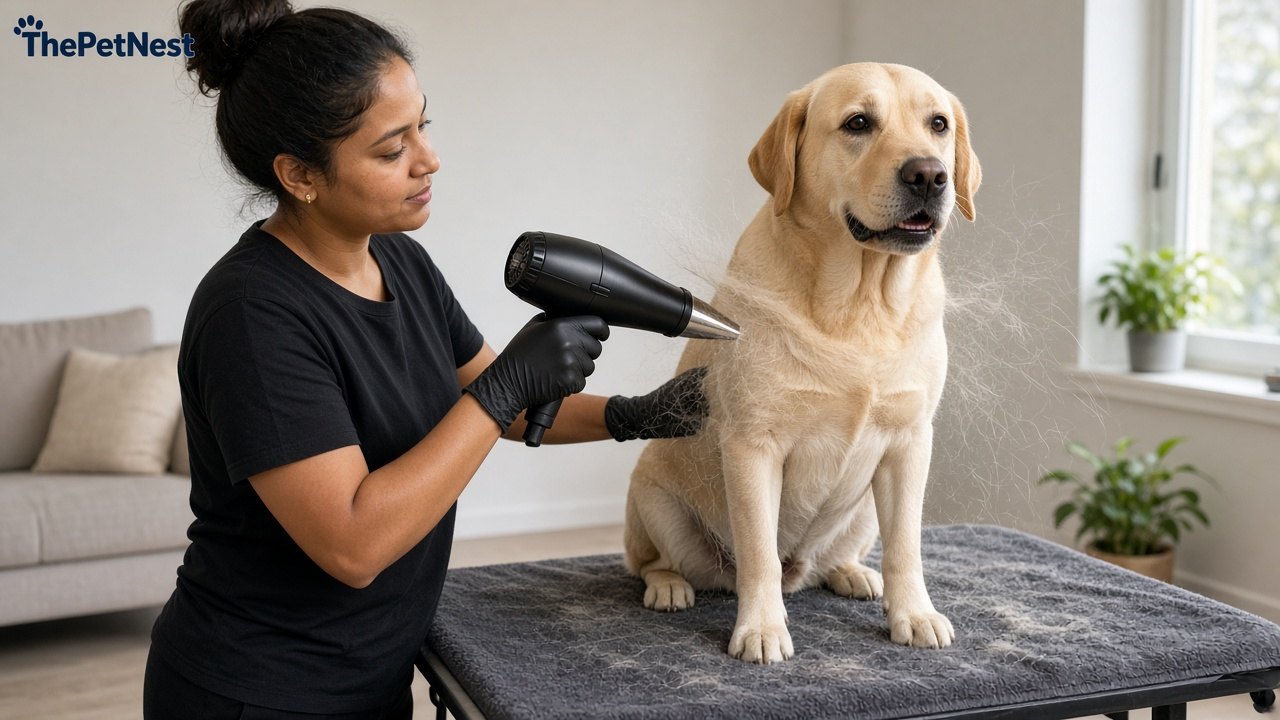
Short answer: every dog with hair sheds; how much depends on the coat. Double-coated breeds like Labradors, German Shepherds, Golden Retrievers and Huskies shed the most, with big seasonal waves. You can’t stop shedding, but brushing with the right tool, a bath followed by a full blow-dry and a professional de-shed every 4 to 6 weeks remove most loose hair before it lands on your floor. Bald patches, sore skin or sudden heavy hair loss need a vet.
Why dogs shed
Hair grows, rests and falls out in a cycle, and new hair pushes the old out. Shedding is that cycle in action. Dogs with a double coat have a soft, dense undercoat beneath the outer guard hairs, and it’s the undercoat that comes out in fluffy clumps. Single-coated and wiry-coated dogs shed less, and curly coats like the Poodle’s hold loose hair in the curls, so it mats instead of falling out.
How much shedding is normal, by coat
When is dog shedding season in India?
In cold climates, dogs shed twice a year: a big spring moult and a smaller one in autumn. In India the pattern is looser. Many double-coated dogs in north India “blow” their coat as winter ends, around February to April, and again as the weather cools after the monsoon. In warm, humid cities like Mumbai and Chennai, many shed a little all year instead. Dogs that live mostly indoors under fans and air-conditioning can also shed steadily rather than in seasons. A coat blow lasts two to four weeks, and it’s when daily brushing pays off most.
Why is my dog shedding so much?
- Season: the most common reason. Clumps of soft undercoat with healthy skin underneath.
- After a bath: warm water and drying loosen hair that was ready to fall. That’s normal and a good thing.
- Stress: a move, a vet visit or fireworks can trigger a burst of shedding.
- Diet: a poor diet can mean a dull coat and more shedding. A complete, balanced dog food covers most dogs; ask your vet before adding supplements.
- After puppies or illness: many dogs lose a lot of coat afterwards and regrow it within a few months.
- A health problem: parasites, allergies, skin infections and hormonal conditions can all cause hair loss. These usually come with other signs (see below).
How to reduce shedding
- Brush with the tool that suits the coat. An undercoat rake or de-shedding tool for double coats, a rubber mitt for short coats, a slicker and comb for long coats. Brush in the direction the hair grows.
- Brush more during a coat blow: daily for double coats, for the two to four weeks it lasts.
- Brush before a bath, then bathe and dry fully. A high-velocity dryer blows out loose undercoat in minutes, which is why a professional de-shed removes so much more hair than brushing alone.
- Don’t shave a double-coated dog. It doesn’t stop shedding, it removes the coat’s protection, and the undercoat can grow back patchy.
- Book a de-shed every 4 to 6 weeks for heavy shedders, and one at the start of each coat blow.
Breed by breed: Labrador shedding, German Shepherd coat blowing, the Golden Retriever coat and Husky care in hot weather.
Getting dog hair off clothes, sofas and floors
- A damp rubber glove or a rubber squeegee, wiped across fabric, gathers hair into rolls you can pick off.
- Keep a lint roller by the door for clothes, and brush your dog outside or on the balcony, not indoors.
- Run clothes through a dryer or shake them out before washing, so hair doesn’t stick in the wet wash. Clean the washing machine filter more often.
- A washable throw on your dog’s favourite seat is easier than cleaning upholstery.
- A vacuum with a pet-hair attachment, used a few times a week during shedding season, keeps it manageable.
When shedding means a vet visit
Normal shedding leaves healthy skin and an even coat. See a vet if you notice bald patches, hair loss in circles or on both sides of the body, red, scaly or broken skin, scabs, constant scratching or licking, a bad smell, or shedding along with weight change or tiredness. If the skin looks fine but there are flakes, our guide to dog dandruff and dry skin may help.
Less hair on the sofa after one visit. Our groomers brush, bathe and blow out loose undercoat at home with a professional dryer. In Delhi, book de-shedding at home in Delhi, including Dwarka. We also groom in Gurgaon, Navi Mumbai, Hyderabad, Chennai, Pune and Bangalore.
Dog shedding FAQs
Can I stop my dog from shedding?
No, shedding is natural. You can cut the loose hair in your home a lot with regular brushing, a bath and full blow-dry, and a de-shed every 4 to 6 weeks.
Does shaving a dog stop shedding?
No. The hair that falls out is just shorter. For double-coated dogs, shaving can damage how the coat grows back.
Which dogs shed the least?
Curly and wiry coats such as Poodles and Schnauzers, and long silky coats such as Shih Tzus. They need regular trims and brushing instead.
Is it normal for my dog to shed a lot after a bath?
Yes. Washing and drying loosen hair that was ready to fall. Brushing before and after the bath catches most of it.
New Comment