


 My Profile
 My Pets
 My Address
 My Orders
 Coupons
 Refer & Earn
 Log Out
Husky in Hyderabad: Grooming & Summer Care That Work
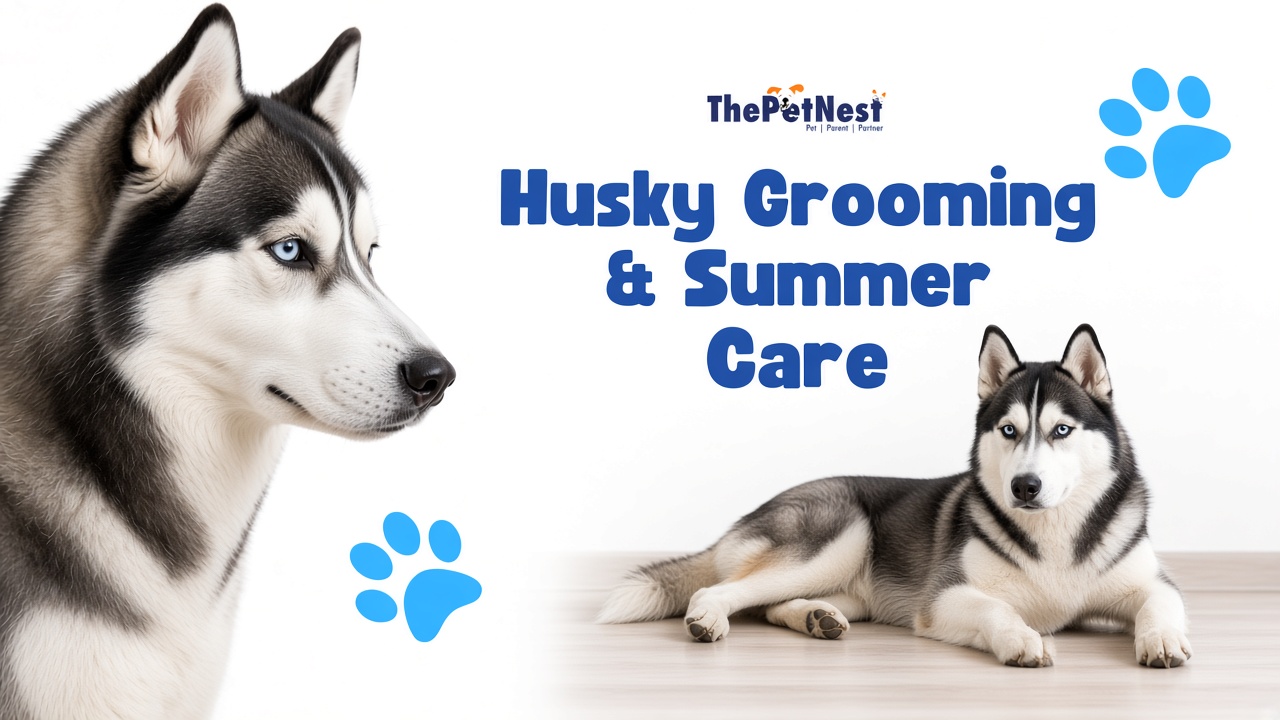
Siberian Huskies were bred to pull sleds across the Arctic. Hyderabad, on the other hand, regularly crosses 40°C in April and May, and summer nights often stay warm. That doesn’t mean a Husky can’t live a healthy life here, but it does mean their owner has to do a few things differently from someone raising the same dog in a cooler city. Grooming is one of the biggest of those things, and it is also where the most common mistake happens.
This guide is based on what our groomers see when they visit Huskies across Hyderabad, from villas in Kompally to apartments in Gachibowli. It covers how a Husky’s coat really handles heat, why shaving backfires, how often to de-shed, and the daily routine that keeps a Husky comfortable from March to June.
Can a Husky really live in Hyderabad?
Yes, with the right setup. Many Huskies live in Hyderabad and do well. The ones that struggle usually have one or more of these problems: they live mostly outdoors, they get walked in the middle of the day, their coat is badly matted or has been shaved, or they simply don’t get enough exercise in the cooler hours and become restless and destructive.
It’s worth being honest about this before bringing one home. Hyderabad has seen repeated reports of Huskies being abandoned once owners realise how much work the breed is in a hot city. If you’re considering a Husky, plan for air-conditioned or well-cooled indoor space, early-morning and late-evening exercise, and regular grooming. If that doesn’t fit your home, a breed built for heat, or an Indie, will be happier. You can also adopt a dog that needs a home rather than buying a puppy.
How a Husky’s coat handles heat
A Husky has a double coat: a dense, soft undercoat close to the skin and longer, coarser guard hairs on top. People often assume all that fur makes the dog hotter. In practice, a healthy, well-brushed double coat does two useful jobs. The guard hairs shade the skin from direct sun, and the air trapped between the layers slows down heat moving in as well as out.
The problem is the undercoat. When it sheds, the loose fluff doesn’t fall out on its own; it gets trapped under the guard hairs and packs down into a warm, felted layer. That packed undercoat is what makes a Husky overheat. Removing it, not removing the whole coat, is the goal of good summer grooming.
Coat blowing, Hyderabad style
In cold countries, Huskies “blow” their undercoat in two big bursts a year. In a warm city, many shed on and off all year, with heavier spells as the seasons change, especially going into summer. Expect tumbleweeds of fur around February and March and again around the start of the monsoon.
Why you shouldn’t shave a Husky
Shaving seems like the obvious answer when a Husky is panting in May. It usually makes things worse:
- Sunburn and heat on bare skin. Without guard hairs, the skin takes direct sun. Huskies with light or pink skin burn easily.
- The coat may not grow back properly. Double-coated breeds can regrow patchy, woolly or slow after a close shave, and in some Nordic breeds the coat doesn’t return to normal for a long time.
- No protection from insects and scrapes. The coat is also a barrier against mosquitoes, ticks and grass cuts.
There is one exception. If the coat is so matted that brushing would be painful, a groomer may need to trim or clip the matted areas. That’s a welfare decision made for that dog, not a summer style. Our groomers will always explain it to you first.
The de-shedding routine that actually keeps them cool
At home, between grooms
- Brush 3 to 4 times a week, and daily during heavy shedding. Use an undercoat rake first, working in the direction the hair grows, then a slicker brush to lift the loose fluff, then a wide-tooth comb to check you’ve reached the skin.
- Focus on the hot spots: behind the ears, the neck ruff, the “trousers” on the back legs and the tail base. These mat first.
- Brush on a cool floor or balcony in the evening, not in the afternoon heat, and keep sessions short.
Professional de-shed every 4 to 6 weeks
A professional session goes further than home brushing can. It combines a bath with a de-shedding shampoo and conditioner, a high-velocity blow-out that pushes loose undercoat out in clouds, a thorough rake-out, nail and paw care, and a hygiene tidy. Most Hyderabad Husky owners see the biggest difference from this in March, just before peak heat. With at-home dog grooming in Hyderabad, the groomer does all of this in your home, so your Husky doesn’t sit in a hot car on the way to a salon. The spa bath is the package most Husky owners book for this.
Drying matters more than the bath
A Husky’s undercoat holds water for hours. Left damp, it stays hot against the skin and can lead to hot spots and fungal irritation, especially in the monsoon. Whether you bathe at home or not, make sure the coat is dried right down to the skin. This is one reason a proper dryer beats towel-drying for this breed.
A summer day for a Hyderabad Husky
The pavement test: put the back of your hand on the road or footpath for seven seconds. If it’s too hot for your hand, it’s too hot for paws.
Frozen treats help too: freeze water with a few pieces of seedless watermelon or cucumber in an ice tray, or stuff a rubber feeder toy with your dog’s usual food and freeze it. Skip anything with salt, onion, grapes or artificial sweeteners. For general hot-weather care that applies to every breed, see our seasonal pet care tips.
Heatstroke: the warning signs
Heatstroke can become life-threatening quickly. Know the signs and act early:
- Heavy, noisy panting that doesn’t settle after resting
- Thick drool, bright red or pale gums
- Weakness, stumbling or seeming confused
- Vomiting or diarrhoea
- Collapse
If you see these, move your dog to a cool, shaded place, offer small amounts of water, wet the belly, armpits and paws with cool (not ice-cold) water, and go to a vet immediately. Don’t wait to see if it passes.
Monsoon care: ticks and damp coats
Hyderabad’s monsoon, roughly June to September, brings a different set of problems. Ticks thrive in damp grass, and a thick coat makes them hard to spot. Run your fingers through the coat after every walk, paying attention to ears, neck, armpits and between the toes. Ask your groomer for a tick check and anti-tick treatment during these months, and talk to your vet about a regular tick-prevention product, since ticks can carry serious illnesses. After rainy walks, towel off and dry the coat properly rather than letting it air-dry. Our monsoon grooming guide covers rainy-season skin care for all breeds in more detail.
Where in Hyderabad does this matter most?
Huskies living in independent homes with lawns, common around Kompally and parts of Kukatpally, tend to pick up more ticks, mud and burrs. Apartment Huskies in the IT corridor have the opposite problem: less outdoor time, more pent-up energy, and owners who need grooming to fit a work-from-home day. Either way, a regular de-shed at home saves you a long drive in the heat. See what’s included in all Hyderabad grooming packages.
Frequently asked questions
Is Hyderabad too hot for a Husky?
Hyderabad is hot for a Husky, but many live here healthily. The keys are indoor cooling in summer, exercise only in the cool early-morning and late-evening hours, and regular de-shedding so the undercoat doesn’t pack down and trap heat.
Should I shave my Husky in summer?
No. The double coat shades the skin and slows heat gain. Shaving can cause sunburn and patchy regrowth. A professional de-shed every 4 to 6 weeks removes the loose undercoat that actually causes overheating.
How often should a Husky be groomed in Hyderabad?
Brush at home 3 to 4 times a week, daily during heavy shedding, and book a professional bath and de-shed every 4 to 6 weeks, ideally with one just before peak summer in March.
How often should I bathe my Husky?
Huskies don’t need frequent baths; their coat stays fairly clean. A bath as part of a professional de-shed every 4 to 6 weeks is usually enough, plus spot-cleaning after muddy monsoon walks. Always dry the coat fully.
What are the signs of heatstroke in a Husky?
Heavy panting that won’t settle, thick drool, red or pale gums, weakness, stumbling, vomiting or collapse. Cool your dog gently and go to a vet immediately.
Want a Husky de-shed without the drive? Book a groomer to your home through ThePetNest pet grooming in Hyderabad. For what each package costs, see our Hyderabad grooming price guide.
New Comment