


 My Profile
 My Pets
 My Address
 My Orders
 Coupons
 Refer & Earn
 Log Out
Persian cat grooming at home (national pillar)
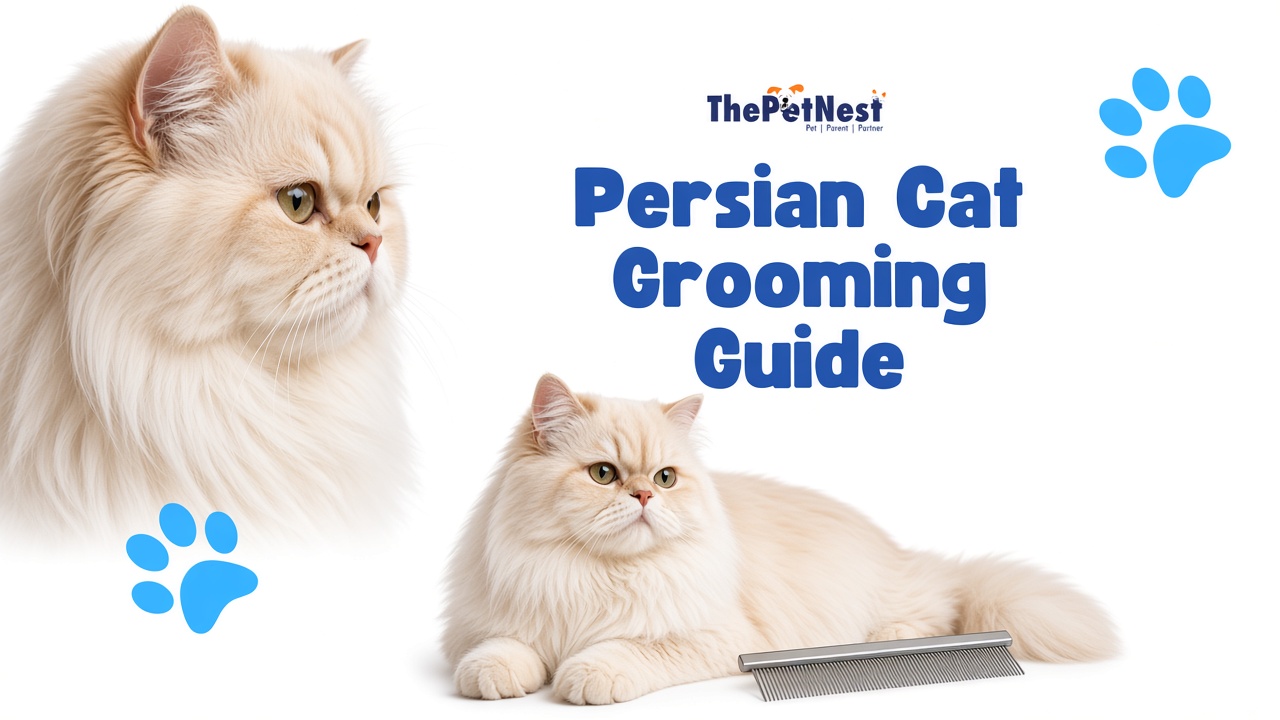
A Persian’s coat is the reason most people fall for the breed, and the reason many owners end up overwhelmed. That long, silky double coat tangles within days if it’s left alone, and a flat Persian face needs care that other cats never do. The good news is that a Persian doesn’t need hours of grooming. It needs a few minutes, done consistently, with the right tools.
Just brought a Persian home? Start with what to know after adopting a Persian cat, then come back here for the grooming routine. This guide covers the full routine: daily combing, face and eye care, bathing and drying, dealing with mats, and what to do about hair fall. It’s written for Indian homes, where heat, dust, and the monsoon all affect a Persian’s coat.
Why Persians need more grooming than other cats
Most cats groom themselves well enough. Persians can’t keep up, for three reasons:
- Coat length and density. The fine undercoat tangles into the long topcoat, and loose hair gets trapped instead of falling out.
- Face shape. The short, flat face makes tears overflow onto the fur and makes it harder for the cat to clean around the eyes and nose.
- Body shape. A stocky build makes it hard for many Persians to reach their back end, so the fur there gets soiled and matted.
Left unmanaged, this leads to painful mats that pull on the skin, skin irritation underneath, more hairballs, and an unhappy cat that starts avoiding being handled.
The tools you actually need
Skip the expensive gadgets until you’ve got the basics right. A good pair of steel combs does more than any fancy brush. And keep scissors away from the coat; cutting out mats with scissors is one of the most common ways cats get accidentally cut, because the skin tents up into the mat.
The daily 10-minute routine
Comb in sections
Work in small sections, starting at the head and moving back. Comb with the wide-tooth comb first, then the fine one. Hold the fur at the base as you comb so you don’t pull on the skin. Pay extra attention to the places that mat first: behind the ears, under the chin, the armpits, the belly and the fluffy “britches” on the back legs.
Clean the face
Wipe the tear area once a day with a soft pad dampened with clean, lukewarm water, from the inner corner of the eye outwards, using a fresh pad for each eye. Then gently dry the area. Keeping it dry is what prevents the reddish-brown staining and the smell that comes with it. If you notice thick yellow or green discharge, squinting or red, swollen eyes, see a vet; that’s more than normal tearing.
Check the back end
Take a quick look under the tail. If the fur there is soiled, clean it with a damp cloth. A regular hygiene trim by a groomer keeps this area short and clean, which makes daily life far easier for long-haired cats.
Bathing and drying a Persian
Persians usually need a bath every 4 to 6 weeks, because their oily, fine coat traps dust and dirt. Comb out all tangles before the bath; water tightens mats. Use lukewarm water and a cat shampoo, keep water away from the face (wipe the face separately), rinse very thoroughly, and apply a light conditioner if your groomer recommends it.
Then dry completely. A damp undercoat left to air-dry can cause skin problems, especially during the monsoon. Towel off first, then use a low-heat, low-noise dryer while combing through, until the coat is dry to the skin. This is the step most home baths fall short on, and the step cats find most stressful. It’s often where a groomer helps most.
Mats: what to do and what not to do
A small, loose tangle can be worked out: hold the fur at the base, and tease the tangle apart from the outside edge with the wide-tooth comb, a little at a time. A few drops of a cat-safe detangling spray can help.
A tight mat close to the skin is a different matter. Don’t pull at it, and don’t cut it out with scissors. Tight mats are best removed by a groomer, sometimes with clippers, because the skin underneath is often already irritated. If a cat is heavily matted all over, a short all-over trim (sometimes called a “lion cut”) can be kinder than hours of de-matting. That is a welfare decision for that cat, and a good groomer will explain the options before starting.
Persian cat hair fall: what’s normal and what’s not
Persians shed. Some hair on the sofa, especially when the seasons change, is normal. In hot Indian summers many Persians shed more, and indoor cats under constant artificial light can shed a little all year.
What helps with everyday hair fall:
- Daily combing, so loose hair ends up on the comb rather than the floor or in your cat’s stomach
- A balanced, good-quality diet and fresh water; ask your vet before adding supplements
- A bath and thorough blow-out every 4 to 6 weeks, which removes a large amount of loose undercoat at once
See a vet if you notice bald patches, redness, scabs, constant scratching or licking, flaky skin, or hair fall that comes with weight loss or low energy. Those can point to allergies, parasites, fungal infections or other health problems that grooming alone won’t fix.
Is Persian cat hair harmful to people?
The hair itself isn’t. Most cat allergies are caused by a protein in cat saliva and skin that sticks to shed hair. Regular grooming and cleaning reduce the amount around the home, but can’t make a cat allergy-free.
Grooming a Persian in India’s climate
Where you live changes the routine a little. In hot, dusty cities, dust settles deep in the coat and summer shedding is heavier, so combing matters more between April and June. In humid and coastal cities, and everywhere during the monsoon, the risk is a coat that never fully dries, so thorough drying after baths and after any time outdoors matters most. In both cases, keep your Persian indoors in the hottest part of the day; their flat faces make them more sensitive to heat.
When to use a professional groomer
Daily combing is something you can do at home. A professional groom every 4 to 6 weeks handles the parts that are hard to do well yourself: a full bath and complete dry, careful de-matting, a sanitary trim, nail care and a tidy of the face and paws. For Persians, having this done at home is often much less stressful than a carrier and a car ride. At-home cat grooming is available with ThePetNest in cities including:
- Cat grooming at home in Hyderabad (Persian cats are one of the most-booked breeds there)
- At-home cat grooming in Chennai
For apartment cats in Hyderabad’s IT corridor, see pet grooming in Gachibowli; for senior cats in central Hyderabad, grooming in Banjara Hills. For general cat care between grooms, read our guide to cat grooming at home.
Frequently asked questions
How often should a Persian cat be groomed?
Comb every day, clean the face daily, and trim nails every 2 to 3 weeks. A full bath, dry and professional groom every 4 to 6 weeks keeps the coat free of mats.
How do I remove tear stains from a Persian cat?
Wipe the area daily with a soft pad dampened with lukewarm water, inner corner outwards, then dry it. Keeping the area dry prevents new staining. See a vet if there’s thick or coloured discharge or the eye looks red or swollen.
Can I cut my Persian cat’s mats with scissors?
It’s safest not to. Cat skin lifts into the mat and is easy to cut. Tease small tangles apart with a comb, and have tight mats removed by a groomer.
Why is my Persian cat losing so much hair?
Seasonal shedding, heat and indoor lighting all increase hair fall, and daily combing is the best fix. Bald patches, scabs, redness or constant scratching aren’t normal shedding; see a vet.
Should I shave my Persian in summer?
Not routinely. Regular combing and a professional groom keep a Persian comfortable. A short trim can be the kindest option for a heavily matted cat, decided with your groomer.
If daily combing isn’t keeping up, a groomer can reset the coat at home. Book Persian cat grooming at home in Hyderabad, or find at-home grooming in your city.
New Comment